
VR Training for Qatar’s Energy & Infrastructure Sector
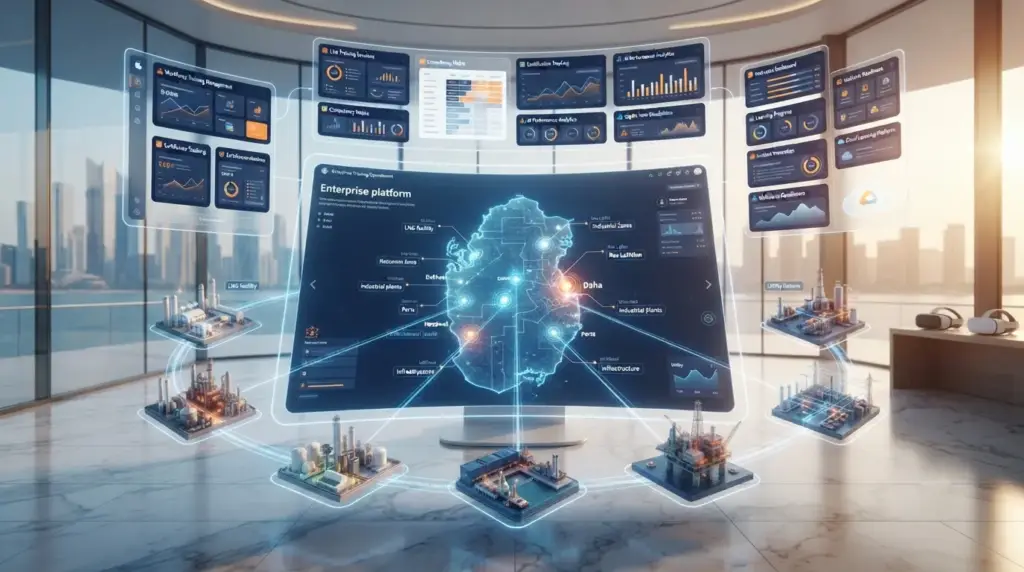
Qatar’s economy relies on complex energy and infrastructure operations—from LNG facilities in Ras Laffan and oilfields in Dukhan to the world’s busiest airports and ports. Training workers in these environments is challenging: real‑world drills are expensive, risky and logistically difficult. Classroom courses often fail to prepare staff for high‑pressure situations. VR training provides a safe, cost‑effective alternative.
Metas develops immersive VR training modules tailored to the energy sector and critical infrastructure. Built on Unreal Engine and enhanced with AI avatars, these modules allow trainees to practice tasks such as equipment inspection, emergency response and operational procedures. For example, a bilingual AI mentor guides a technician through the sequence of starting up a gas compressor, monitors their actions and provides feedback when mistakes occur. Simulations include realistic physics, sound and haptic feedback, creating a visceral learning experience.
The benefits are significant. Workers gain hands‑on experience without endangering themselves or assets. Training can be repeated until competence is achieved, reducing errors when transitioning to the real environment. Organizations minimize downtime because simulations run off‑site or during scheduled training periods. The modules also support multi‑language instruction, accommodating Qatar’s diverse workforce. Data analytics track each trainee’s performance, allowing managers to identify skill gaps and document compliance.
Implementing VR training begins with a needs assessment. Metas collaborates with safety officers and subject‑matter experts to map procedures and potential hazards. Content is localised to match Qatari regulations and includes translation into Arabic and other relevant languages. Hardware can range from desktop setups to full VR rooms with motion platforms. Integration with existing learning management systems ensures seamless record‑keeping.
FAQs
Can VR training replace on‑the‑job training?
It supplements but does not entirely replace on‑site experience. VR prepares workers to perform tasks correctly and safely before they encounter them in the field.
How long does it take to develop a custom module?
Timelines vary; simple modules may take a few weeks, while complex scenarios require months of collaboration.
What about hardware maintenance?
Metas provides guidance on hardware selection and maintenance to ensure longevity and reliability.
Call to Action
Invest in safer, smarter training. Contact Metas-> to design a customized VR training programme for your energy or infrastructure operations in Qatar.