

Metaverse & VR Training in Oman – Beyond the Hype
The term “metaverse” dominates headlines, promising a future where digital and physical worlds converge. For Oman’s government agencies and enterprises, the challenge lies in identifying practical applications of VR and metaverse technologies that deliver value today. This article explores realistic use cases for VR and metaverse training in Oman, moving beyond marketing buzzwords.
Understanding the Metaverse
At its core, the metaverse is a persistent, shared digital space where users interact through avatars. It leverages VR, augmented reality (AR) and real‑time 3D engines. While fully realised metaverse platforms remain in development, many of its building blocks—such as digital twins, multiplayer VR simulations and AI avatars—are already being used for training.
Practical Use Cases for Oman
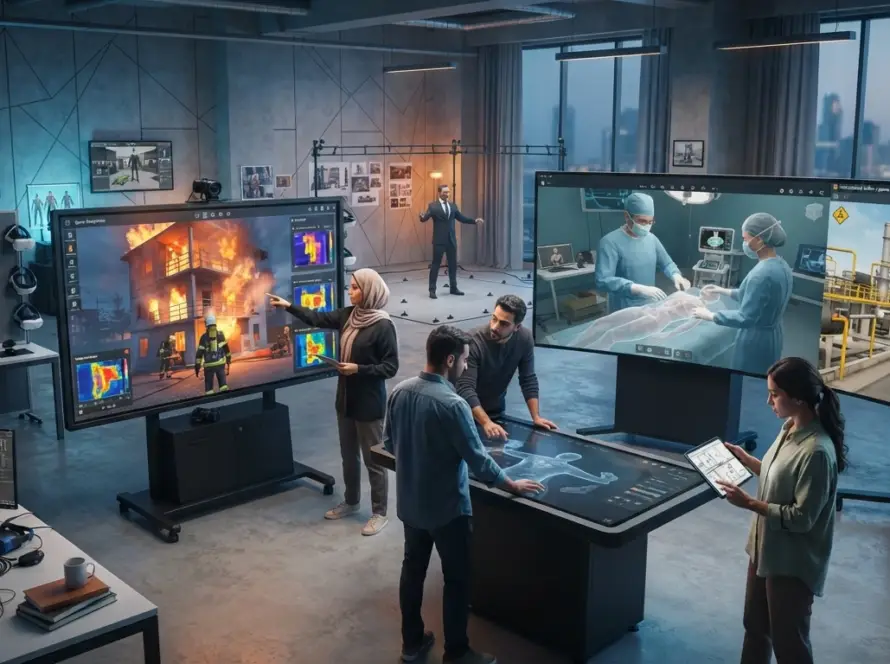
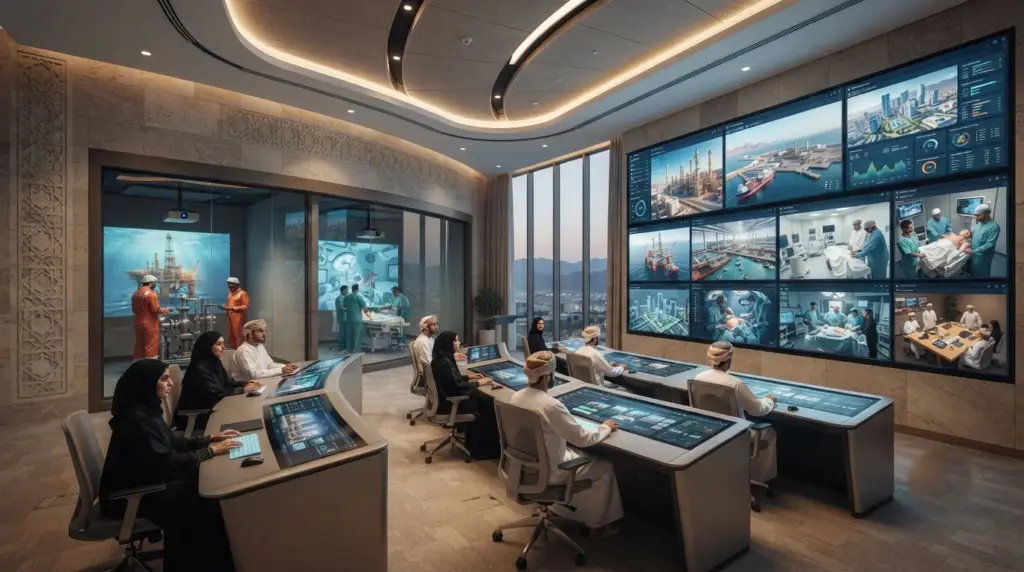
- Joint Emergency Response Training: Ministries of Health, Interior and Transport use multi‑user VR environments to coordinate responses to disasters like cyclones or oil spills.
- Citizen Services: Virtual service centres let citizens renew licences, apply for permits or attend webinars within an immersive portal guided by AI avatars.
- Cultural Events: Metaverse‑style platforms host virtual exhibitions and conferences, allowing remote participation and networking.
- Industrial Collaboration: Engineers collaborate on digital twins of oil refineries or infrastructure projects, reviewing designs in real time.
- Education & Skills: Vocational students practise technical skills in a persistent virtual campus.
Benefits & Considerations
- Accessibility: Remote participants from interior regions can join training sessions without travel.
- Cost Efficiency: Virtual facilities reduce the need for physical training centres.
- Data Security: Sensitive information must be protected with encryption and access controls.
- User Adoption: Training programmes should be user‑friendly and delivered in Arabic and English.
- Scalability: Modular design allows the addition of new scenarios and participants.
Implementation Roadmap
- Define Objectives: Determine the problem the metaverse solution will solve (e.g., remote collaboration, citizen engagement).
- Choose a Platform: Select technology that supports real‑time 3D, multi‑user interactions and API integrations.
- Develop Content: Build environments, avatars and scenarios relevant to the use case.
- Pilot & Evaluate: Start with a small group to identify technical and user‑experience issues.
- Scale & Integrate: Roll out across departments or regions. Integrate with existing systems (CRM, databases).
- Measure Outcomes: Track engagement, cost savings and performance improvements.
FAQs
Is the metaverse ready for widespread use?
While full metaverse platforms are still evolving, individual components like digital twins and VR simulations are mature.
What hardware is required?
PCs, VR headsets and stable internet connections are necessary for immersive experiences.
How do we ensure security?
Use secure servers, authentication protocols and data encryption.
What languages are supported?
Experiences can be delivered in Arabic and English to serve Oman’s diverse population.
FAQs for CMS
FAQ 1 Question: Is the metaverse ready for widespread use?
FAQ 1 Answer: While full metaverse platforms are still evolving, individual components like digital twins and VR simulations are mature.
FAQ 2 Question: What hardware is required?
FAQ 2 Answer: PCs, VR headsets and stable internet connections are necessary for immersive experiences.
FAQ 3 Question: How do we ensure security?
FAQ 3 Answer: Use secure servers, authentication protocols and data encryption.
FAQ 4 Question: What languages are supported?
FAQ 4 Answer: Experiences can be delivered in Arabic and English to serve Oman’s diverse population.
Call to Action
Curious about how VR and the metaverse can improve training in your organization? Contact Metas-> to explore practical, value‑driven applications for Oman.