

VR Training for UAE Airlines – Elevating Cabin Crew & Pilot Readiness
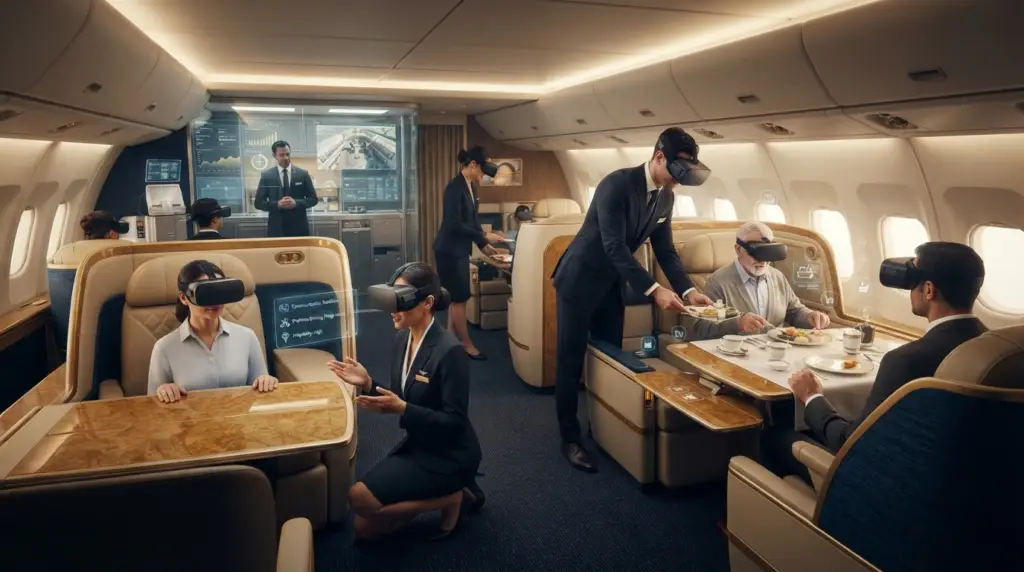
UAE carriers like Emirates and Etihad are known for their high service standards. To maintain excellence, they invest heavily in training cabin crew and pilots. Virtual reality (VR) training allows airlines to simulate emergency procedures, customer service scenarios and cockpit environments in a safe, repeatable manner. Metas’ simulation expertise creates realistic modules that reduce costs and improve retention.
Use Cases in Aviation
- Cabin Safety Drills: VR recreates smoke in cabins, emergency evacuations and equipment malfunctions. Crew practise fire extinguishing, passenger management and door operations.
- Service Excellence: Scenarios cover meal service, conflict resolution and cultural sensitivity training. Avatars portray diverse passenger profiles.
- Pilot Training: VR cockpits complement flight simulators, training pilots on instrument scanning, emergency checklists and situational awareness.
- Airport Operations: Modules instruct staff on ground handling, baggage procedures and ramp safety.
Benefits to Airlines
- Consistency: Standardised modules ensure all crew receive the same training.
- Cost Savings: VR reduces reliance on full flight simulators and physical mock‑ups.
- Risk Reduction: Crews practise rare emergencies without endangering passengers or equipment.
- Shorter Training Time: Interactive scenarios boost retention and reduce training duration.
- Flexibility: Modules update quickly to reflect new aircraft types or procedures.
Implementation Steps
- Identify Competencies: Determine training objectives—safety, service, technical skills.
- Content Development: Collaborate with Metas to build scenarios reflecting the airline’s SOPs, aircraft configurations and corporate culture.
- Hardware Selection: Choose VR headsets suitable for extended use; consider stand‑alone devices for mobility.
- Integration: Connect VR results to Learning Management Systems for tracking and certification.
- Pilot Programme: Test with a small group of crew and pilots before scaling across departments.
FAQs
Do we still need full flight simulators?
Yes. VR complements but does not replace certified flight simulators required for licensing.
How long are training sessions?
Most VR modules last 10–30 minutes and can be combined into longer curricula.
Can VR training cover new aircraft types?
Yes. Modules can be updated to reflect different cabin layouts and cockpit instrumentation.
Is the training certified?
VR modules support regulatory requirements but must be approved by relevant authorities.
FAQs for CMS
FAQ 1 Question: Do we still need full flight simulators?
FAQ 1 Answer: Yes. VR complements but does not replace certified flight simulators required for licensing.
FAQ 2 Question: How long are training sessions?
FAQ 2 Answer: Most VR modules last 10–30 minutes and can be combined into longer curricula.
FAQ 3 Question: Can VR training cover new aircraft types?
FAQ 3 Answer: Yes. Modules can be updated to reflect different cabin layouts and cockpit instrumentation.
FAQ 4 Question: Is the training certified?
FAQ 4 Answer: VR modules support regulatory requirements but must be approved by relevant authorities.
Call to Action
Elevate your airline’s training programmers. Contact Metas-> to create tailored VR modules for cabin crew, pilots and ground staff in the UAE