

Immersive Education in Oman – Digital Twins in Schools & Universities
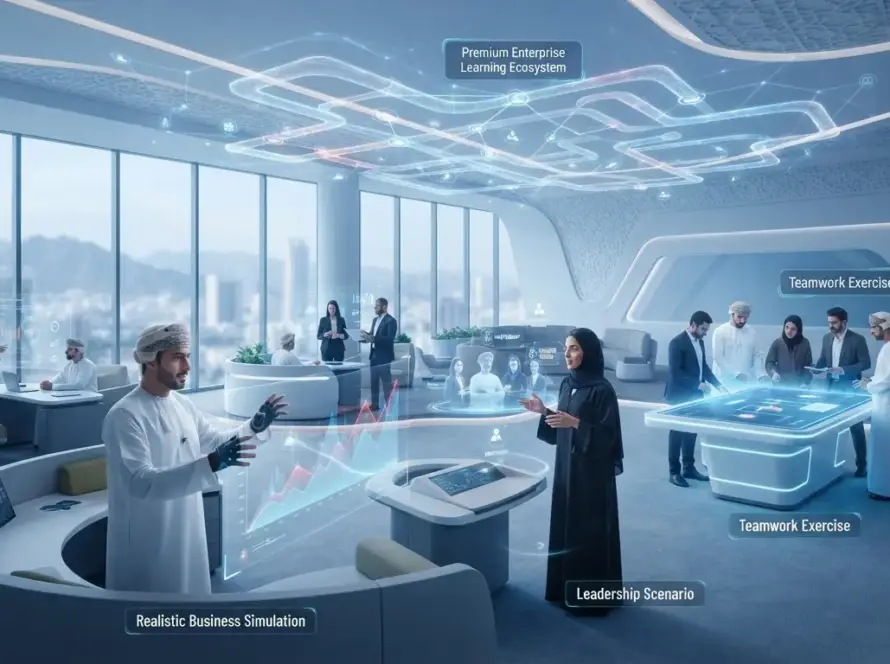
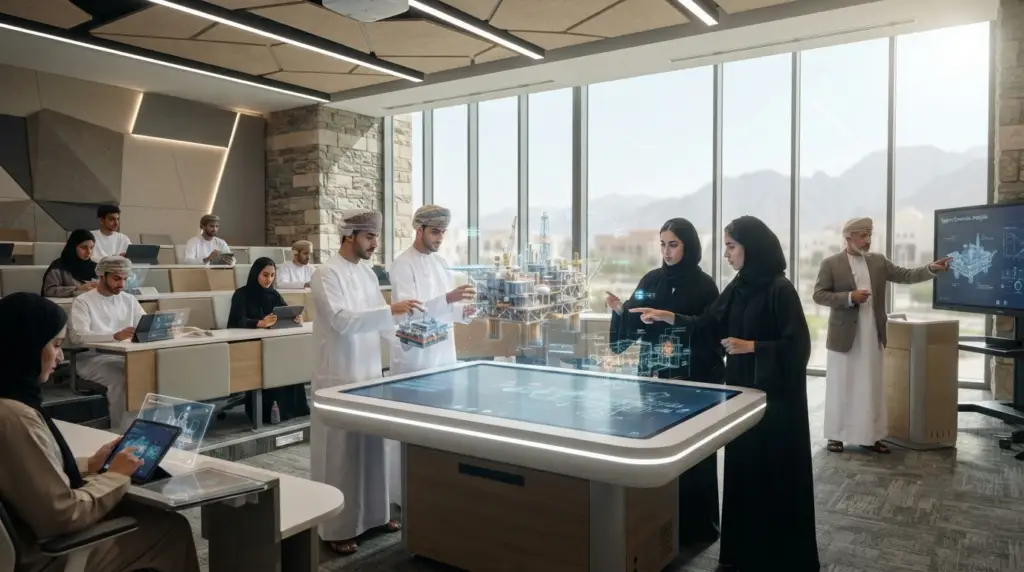
The Sultanate of Oman is investing in education to prepare its youth for a knowledge‑based economy. To enhance science, technology, engineering and mathematics (STEM) learning, schools and universities are adopting digital twins and VR technology. By providing interactive models of complex systems—from historical sites to industrial processes—students can explore concepts in a hands‑on way. Metas’ expertise in digital twin experiences, serious games and AI avatars offers valuable tools for educators.
Educational Applications of Digital Twins
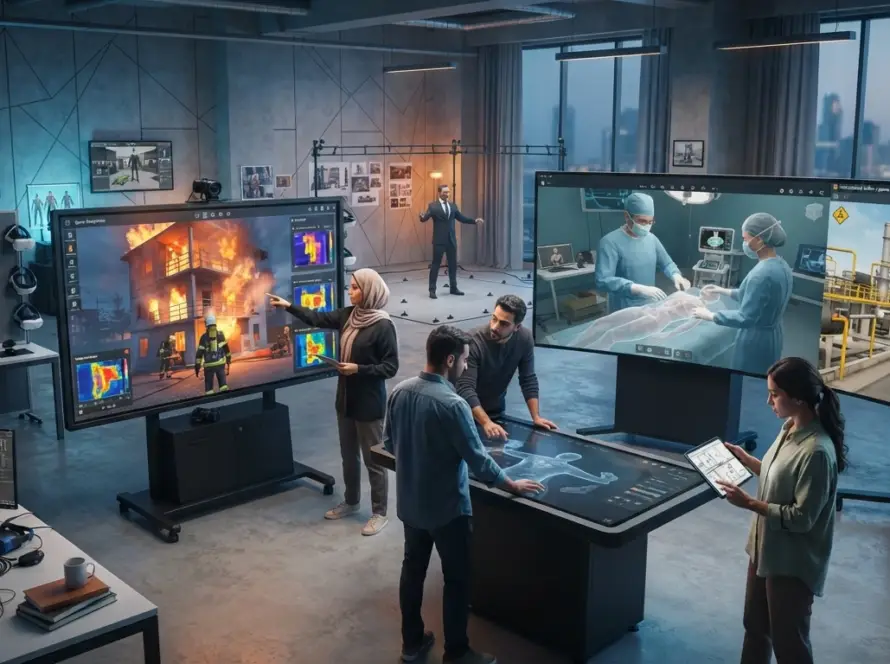
- Virtual Laboratories: Science students conduct experiments in simulated labs, observing chemical reactions or physical phenomena safely.
- Historical Simulations: History classes tour digital replicas of forts, markets and ancient cities.
- Engineering Design: Students visualise and manipulate 3D models of machines, bridges and buildings, understanding how components interact.
- Medical Training: Nursing and medical programmes practise procedures on digital human models before clinical rotations.
- Field Trip Alternatives: Remote learning students explore natural environments like wadis, deserts and coral reefs through immersive experiences.
Benefits for Omani Education
- Engagement: Interactive experiences hold students’ attention and stimulate curiosity.
- Accessibility: Remote learners and students with disabilities participate equally.
- Cost‑Effective: Digital labs reduce the need for expensive equipment and consumables.
- Relevance: Localised content ties curricula to Omani heritage and industries.
- Skill Development: Students gain familiarity with advanced technologies used in modern workplaces.
Implementation Considerations
- Curriculum Alignment: Work with educators to integrate digital twins into lesson plans.
- Training for Teachers: Provide professional development on using VR equipment and software.
- Infrastructure: Ensure schools have adequate internet bandwidth and devices.
- Local Content: Develop models and scenarios that reflect Omani culture, geography and industries.
- Evaluation: Assess learning outcomes compared with traditional methods.
FAQs
Do schools need VR headsets?
Not necessarily. Many experiences run on PCs or tablets, though headsets provide deeper immersion.
How do we create localised content?
Metas collaborates with educators and local experts to develop relevant models and narratives.
Is training required for teachers?
Yes. Training ensures teachers can integrate the technology effectively.
What subjects benefit most?
STEM, history, geography and vocational training programmes all see gains from immersive learning.
FAQs for CMS
FAQ 1 Question: Do schools need VR headsets?
FAQ 1 Answer: Not necessarily. Many experiences run on PCs or tablets, though headsets provide deeper immersion.
FAQ 2 Question: How do we create localised content?
FAQ 2 Answer: Metas collaborates with educators and local experts to develop relevant models and narratives.
FAQ 3 Question: Is training required for teachers?
FAQ 3 Answer: Yes. Training ensures teachers can integrate the technology effectively.
FAQ 4 Question: What subjects benefit most?
FAQ 4 Answer: STEM, history, geography and vocational training programmes all see gains from immersive learning.
Call to Action
Interested in bringing immersive education to your school or university? Contact Metas-> to explore digital twin solutions that engage students and support Omani curricula.