


Arabic AI Avatars in Egypt: Better Customer Service and Training
Many organizations in Egypt handle repeated questions every day: how to apply, where to pay, what documents are required, how to use a service, or what a new system means. Arabic AI avatars can make these interactions clearer by giving users a human-like digital guide that speaks their language and follows a controlled knowledge base.
What is an Arabic AI avatar?
An AI avatar is a digital character that can speak, respond, and guide users through information or training. Unlike a normal chatbot, an avatar gives the interaction a visible face and voice. It can appear on a website, kiosk, tablet, training screen, or hologram display.
For Egypt, Arabic support is not optional. The avatar should handle clear Arabic, local phrasing where appropriate, and English when the audience includes foreign residents, investors, or regional users.
Where AI avatars can be used in Egypt
Government service centers can use avatars to explain procedures, documents, appointments, and application steps. Utilities can use them for billing questions, outage instructions, and customer education. Companies can use avatars for onboarding, HR training, product tutorials, and visitor guidance.
In healthcare, education, and real estate, avatars can reduce repeated staff explanations while keeping the user journey friendly and understandable.
Why avatars are useful for training
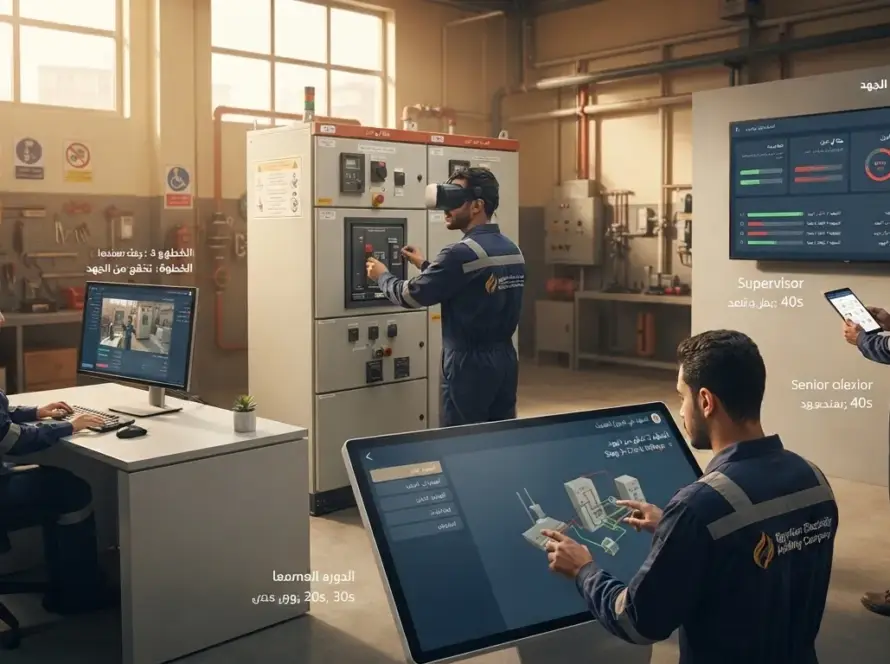
An avatar can act as a virtual trainer. It can introduce a scenario, explain rules, ask questions, give feedback, and guide the learner to the next module. When combined with simulation or gamification, the avatar becomes part of an active learning experience rather than a passive video.
This helps organizations standardize training, especially when the same message must be delivered to multiple branches, new hires, or large groups.
How to plan a successful AI avatar project
The first step is choosing a focused use case. The avatar should not start by trying to answer everything. Begin with a defined process, such as onboarding, service FAQs, safety instructions, or visitor guidance.
Next, build a verified knowledge base, define the avatar’s tone, test Arabic phrasing, and decide what happens when the avatar cannot answer. For sensitive topics, escalation to a human agent should be built into the workflow.
Next step
If your team answers the same questions every day, contact Metas to explore an Arabic AI avatar for customer service, training, or public information in Egypt.
What to prepare before avatar deployment
Prepare the knowledge base, approved answers, user journeys, escalation rules, brand personality, language preferences, and privacy requirements. AI avatars perform better when their scope is clear and their answers are reviewed before launch.
FAQs
Q: Can an AI avatar speak Egyptian Arabic?
A: Yes. The language model and scripts can be tailored to Arabic usage and local phrasing depending on the project scope.
Q: Can AI avatars replace call center agents?
A: They are better used to handle repeated questions and guide simple journeys, while human agents handle complex or sensitive cases.
Q: Can the avatar work on a kiosk?
A: Yes. AI avatars can be deployed on kiosks, web pages, screens, or other interactive interfaces.
Q: What information does the avatar need?
A: It needs a structured knowledge base, approved answers, user flows, and clear escalation rules.