

VR Training Modules in Arabic: Design Principles for Egyptian Teams
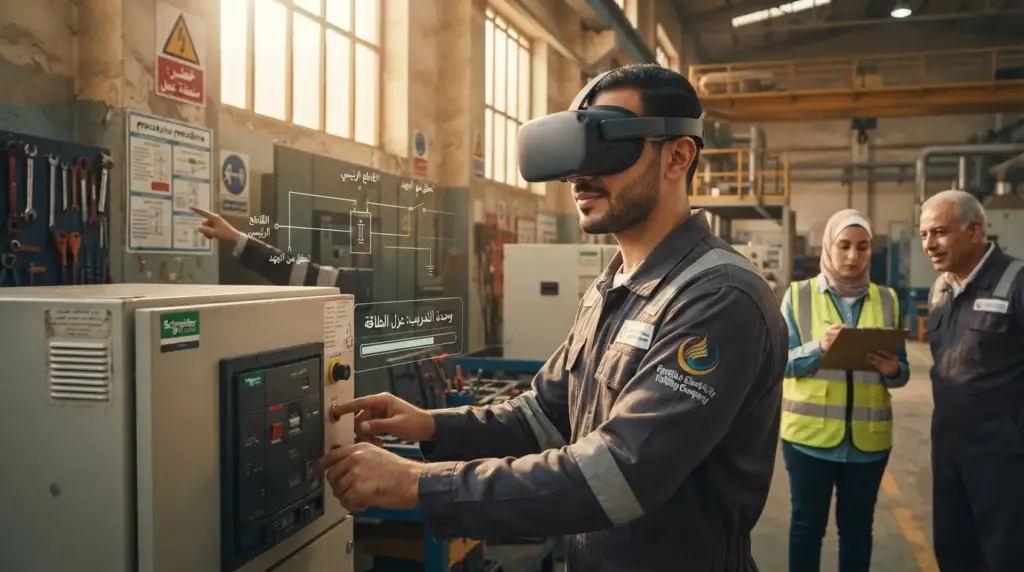
Arabic VR training is not a translation task only. A strong module should feel natural to Egyptian users, match their work context, and guide them through practice with clear language and feedback.
Start with the learning objective
Before writing scripts or building 3D assets, define what the learner must be able to do after the module. Is the goal to identify hazards, follow a machine procedure, handle a customer complaint, or understand a new public service?
The learning objective determines the scenario, scoring, feedback, and level of realism required.
Use Arabic naturally
For Egypt, Arabic content should be clear, direct, and suitable for the audience. Some organizations prefer Modern Standard Arabic for formal training. Others may need simpler Egyptian Arabic phrasing for frontline teams.
Voice-over, subtitles, button labels, and error messages should all be reviewed. A confusing word in VR can interrupt the learner and reduce trust in the experience.
Design for comfort and accessibility
VR training should avoid unnecessary movement, unclear instructions, or long sessions that cause fatigue. Modules should be broken into short scenarios with clear steps.
Not every user can or should use a headset for long periods. When needed, a desktop version or guided screen mode can improve accessibility and scalability.
Measure what matters
A VR module should capture useful performance data: completion, incorrect choices, reaction time, repeated attempts, and final score. The data should help trainers coach employees, not overwhelm them.
Metas can combine VR, real-time 3D, AI avatars, and serious game mechanics to create modules that are engaging but still focused on measurable outcomes.
Next step
If you need Arabic VR training that Egyptian teams can actually use, contact Metas to plan a focused module from learning objectives to rollout.
What to prepare before Arabic VR production
Prepare the learning objective, target user profile, preferred Arabic style, English requirements, voice-over needs, accessibility concerns, and assessment method. Test language early with real users rather than waiting until the final build.
FAQs
Q: Should Arabic VR training use Egyptian dialect or formal Arabic?
A: It depends on the audience, industry, and brand. Formal Arabic is safer for official training, while Egyptian phrasing may feel more natural for frontline teams.
Q: How long should a VR training module be?
A: Many modules work best in short sessions, often 10 to 20 minutes, especially for first-time VR users.
Q: Can we include English too?
A: Yes. Bilingual Arabic and English training is useful for mixed teams and regional organizations.
Q: Can performance data be exported?
A: Yes. Reporting can be designed around the client’s training and LMS requirements.