
VR Onboarding & Corporate Training in Oman – Accelerate Learning
As Omani companies expand, onboarding new employees quickly and effectively becomes a priority. Traditional orientation sessions can be time‑consuming and inconsistent, especially across multiple branches. Virtual reality (VR) onboarding immerses employees in realistic workplace scenarios, enabling them to learn company culture, safety procedures and job tasks through experience. Metas’ training simulations are built on Unreal Engine and support multilingual interfaces.
Why Use VR for Onboarding?
- Consistency: Each new hire receives the same high‑quality training, regardless of location.
- Engagement: Interactive experiences keep learners attentive and reduce information overload.
- Retention: Experiential learning improves recall and application of knowledge.
- Scalability: Modules can be deployed across Muscat headquarters and remote offices simultaneously.
- Safety: Employees practise procedures in a risk‑free environment before entering the real workplace.
Onboarding Scenarios
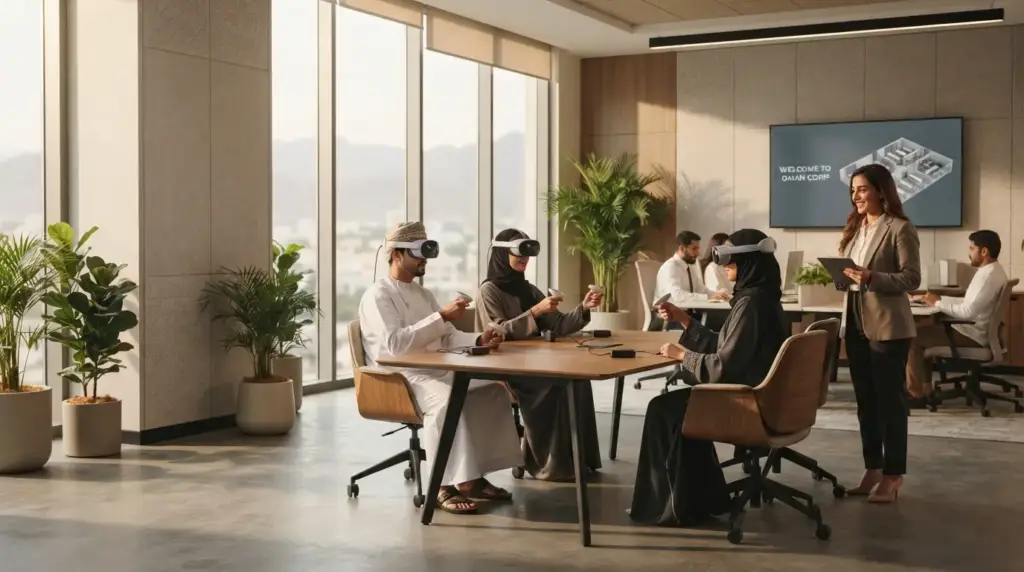
- Office Orientation: New hires tour a virtual office, meeting digital avatars of key colleagues and learning about departments.
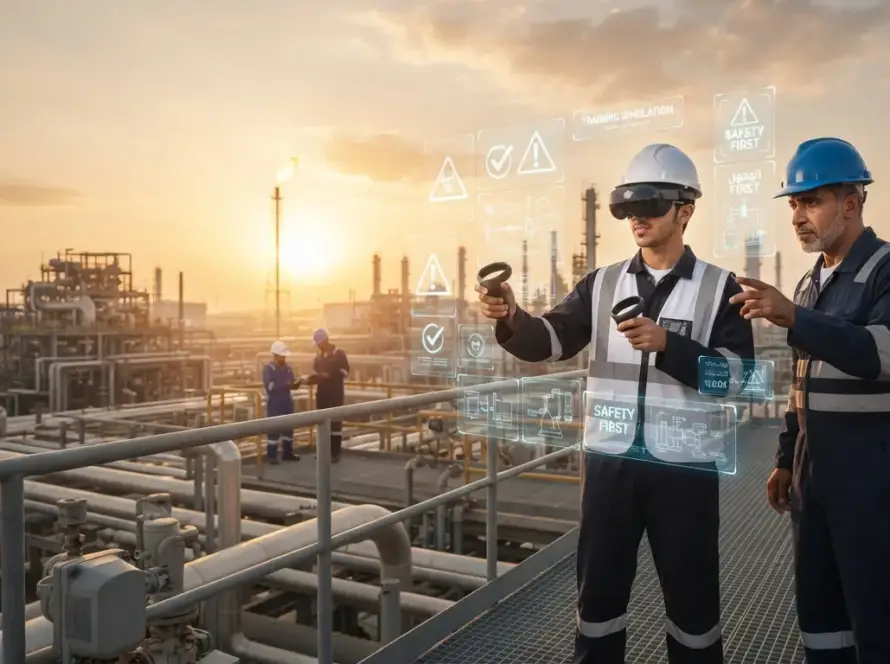
- Safety & Compliance: Modules cover fire evacuation procedures, first aid and equipment handling.
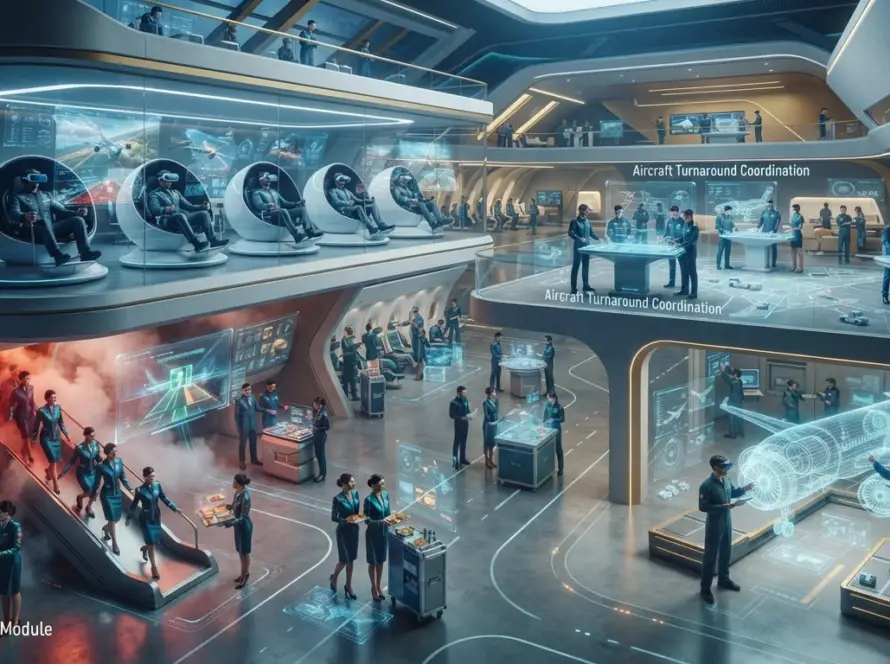
- Role‑Specific Training: Employees practise tasks such as operating machinery, customer interactions or using software systems.
- Cultural Induction: Scenarios teach company values, ethical guidelines and workplace etiquette.
Implementation Steps
- Define Objectives: Determine what new hires must know before their first day.
- Content Development: Work with Metas to script scenarios and record voice‑overs in Arabic and English.
- Pilot & Feedback: Test the module with a small group and adjust content based on feedback.
- Deploy: Provide VR headsets or accessible web versions to new hires. Use analytics to track completion and performance.
- Iterate: Update modules as policies or roles change.
Benefits for Omani Employers
- Faster Ramp‑Up: Employees reach productivity sooner.
- Reduced Training Costs: Once developed, digital modules can be reused across cohorts.
- Enhanced Compliance: VR ensures consistent delivery of regulatory and safety information.
- Employee Satisfaction: Engaging onboarding experiences leave a positive impression.
FAQs
Do we need VR headsets for every employee?
Not necessarily. Some modules run on PCs or mobile devices, though headsets increase immersion.
How long does it take to create an onboarding module?
A basic module can be created in 6–8 weeks.
Can modules be localised for different branches?
Yes. We tailor content to regional offices, languages and procedures.
How do we measure effectiveness?
Track completion rates, test scores and feedback surveys. Compare performance between VR‑trained and traditionally trained employees.
FAQs for CMS
FAQ 1 Question: Do we need VR headsets for every employee?
FAQ 1 Answer: Not necessarily. Some modules run on PCs or mobile devices, though headsets increase immersion.
FAQ 2 Question: How long does it take to create an onboarding module?
FAQ 2 Answer: A basic module can be created in 6–8 weeks.
FAQ 3 Question: Can modules be localised for different branches?
FAQ 3 Answer: Yes. We tailor content to regional offices, languages and procedures.
FAQ 4 Question: How do we measure effectiveness?
FAQ 4 Answer: Track completion rates, test scores and feedback surveys. Compare performance between VR‑trained and traditionally trained employees.
Call to Action
Accelerate your onboarding process with VR. Contact Metas-> to design custom training modules for your organization in Oman.